Friday, 29 December 2017

Pixel C: the hybrid tablet is gone from the Google Store

So long, Pixel C: the hybrid tablet is gone from the Google Store
The Google Pixel C was a quirky little tablet with a cool magnetically-attached keyboard, introduced way back in December of 2015. It didn't enjoy much popularity — despite being marketed as a productivity machine, it ran pretty much vanilla Android and it was pricey, starting at $499 with the keyboard being a separate $149 buy. Still, it had its fandom.

If you've been waiting for the right time for the Pixel C's price to drop and the stars to align themselves in the right way so you could pull the trigger and buy one, that moment is quickly fleeting. The Google Pixel C has been silently pulled from the Google Store.

Google still has a tablet on sale, though — the Pixel C is succeeded by the Google Pixelbook. Another laptop-tablet hybrid, which also has a stylus — the Pixelbook Pen (sold seperately). The bad news is that it'll cost you $899 right now, with the pen being a $99 extra.

You can still bolt over to Ebay to grab a second-hand or old stock Pixel C — there are plenty to go around. But keep in mind that they are still holding a rather high price and consider the fact that the device was last updated to Android 7 Nougat and will likely not get more major updates.

Xiaomi launches the Yeelight speaker, powered by Alexa

Xiaomi joins the smart home speaker game with its latest announcement. The gadget is called Yeelight and is powered by Amazon's Alexa. The speaker’s design is similar to the Echo Dot with a blue LED ring and volume control buttons on the top.
Xiaomi launches the Yeelight speaker, powered by Alexa
Specs-wise, the speaker has quad-core Cortex-A53 CPU with 256 MB RAM and 256 MB internal memory. The Yeelight has six microphones that listen in 360 degrees with a 5-meter range.
To reduce the echo, Xiaomi is using Acoustic Echo Cancellation and Beamforming technology. It has 4 GHz/5 GHz dual-band Wi-Fi connectivity, but can also be paired via Bluetooth. The Yeelight voice assistant also has Dual AI system to control other Xiaomi home automation products. Other devices should be supported in the coming weeks.
Launching at the sweet price of CNY199 (about €25 or $30) on January 31, the Yeelight can be purchased on the Xiaomi online store.
Source

Huawei shipped 153 million smartphones in 2017, but revenue growth is slowing

  • CEO Ken Hu confirms that Huawei shipped 153 million smartphones in 2017.
  • Revenue rose by 15 percent to 600 billion yuan, but growth is down to its lowest rate since 2013
  • Can a push into the US market boost Huawei’s profits?
We’ve known for a while now that Huawei shipped a mammoth quantity of smartphones this past year. Now, thanks to an end of year message shared by current CEO, Ken Hu, we know that the global shipments figure is around a whopping 153 million, with company revenue rising by 15 percent to 600 billion yuan in 2017.

It’ll certainly be interesting to watch Huawei’s movements in the coming months with all of this in mind. While it dabbled with the US market with the Mate 9 (via Amazon), Huawei is expected to go all-in at CES 2018 with the Mate 10.


Apple issues statement regarding iPhone batteries and performance


Last week, we saw reports of Apple slowing down the performance of older iPhones. Back then, Apple had provided a short statement to media stating it was doing this to protect devices with older batteries from suddenly shutting down. Obviously, that didn't go down so well with people who have had theories of Apple intentionally slowing down older iPhones, with multiple lawsuits being filed along with the hue and cry that comes with these sort of things.
Today, Apple has released a full and formal statement regarding the situation surrounding the iPhone batteries and performance.
Right off the bat Apple doubled down on its claim that it has never and will never intentionally slow down the usable life of its devices or degrade its user experience in any way to drive customer upgrades and that its goal has always been to create products customers love and last as long as possible
First and foremost, we have never — and would never — do anything to intentionally shorten the life of any Apple product, or degrade the user experience to drive customer upgrades. Our goal has always been to create products that our customers love, and making iPhones last as long as possible is an important part of that.
After that, Apple took time to elaborate on how batteries age and what it has done to prevent the phone from shutting down. This is just a longer explanation of the statement Apple initially release. Basically, batteries get old and cannot provide peak energy loads, which causes the device to shut down. To prevent this, iOS 10.2.1 released in January 2017 will cap the performance of iPhone 6, iPhone 6 Plus, iPhone 6s, iPhone 6s Plus and iPhone SE when it detects a weak battery to prevent the device from shutting down. This feature was extended to the iPhone 7 and iPhone 7 Plus in iOS 11.2 released earlier this month.
The important thing to realize is the performance cap is temporary and as soon as the aged battery is replaced the performance will go back to what it used to be.
This also does not affect devices other than those mentioned above. None of them have this ability to cap performance depending on battery health.
Since it essentially comes to the battery, Apple also announced that it will cut down the prices of out-of-warranty battery replacement from $79 to $29. This applies to iPhone 6 and newer devices, starting late January 2018 to December 2018, worldwide.
Second, Apple will release an iOS update in early 2018 that will convey the health of the battery in the software to let users know if it is affecting their performance and if they need to replace it.
Apple also said it is working on improving how it manages performance and unexpected shutdowns as batteries age.
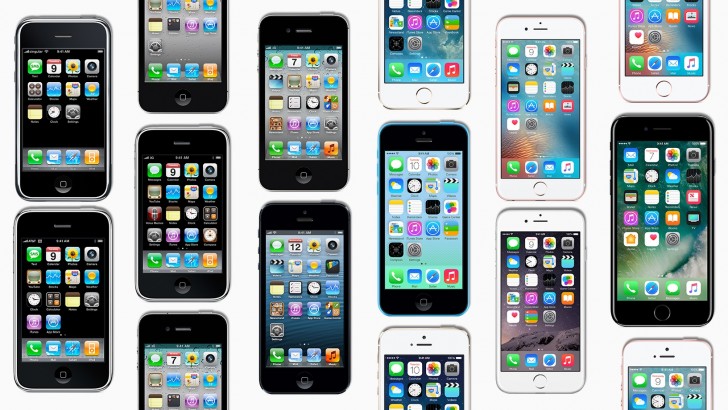
While it is good that Apple finally came clean with what it is doing and the drop in battery replacement cost is a nice touch, this whole thing could have been avoided if the company was better at communicating with its customers from the beginning. That part is entirely on Apple. Surely, Apple would have been aware of the conspiracy theories of it intentionally slowing down the performance of its older devices so people upgrade to newer ones, which doesn't even really apply in this case as this performance capping update came out in January 2017 and applies to a handful of iOS devices while the conspiracy theories are old as the iPhone itself. In such a situation Apple should have been extra vocal about what it is doing with performance on older devices. Sure, some people would have still complained but the overall result would have been better than current situation.
If you are an iPhone user, new or old, there are a few things worth remembering. If you have one of the aforementioned devices that feels slow, you could have a bad battery that needs replacing. Or, the reason your device is slow is just because it's old and old devices running new software are always going to be slow. It's the same reason why a four year old Android phone feels slow now or a ten year old computer feels slow running the latest version of Windows. It's because the software demands have outpaced the hardware, not because their makers have put a ticking time bomb in there.
Second, and this shouldn't need explaining because it feels like common sense, but no company, Apple or otherwise, can benefit from making its devices worse. It just increases the likelihood of people switching to other brands when they upgrade, not to the brand that they think intentionally ruined the performance of their old device. Planned obsolescence might work in segments where there isn't a lot of competition and your customers have have no choice but to buy from you, but not in a segment as highly competitive as smartphones where every misstep can lose you customers.
So maybe it's time to revisit this whole situation in your head from a rational perspective and see if all the fuss was worth it.

Thursday, 28 December 2017

Moto Z2 Force starts getting Android 8.0 Oreo update at T-Mobile

Moto Z2 Force starts getting Android 8.0 Oreo update at T-Mobile
T-Mobile is the second major US carrier that pushes out an Android 8.0 Oreo update for the Moto Z2 Force. Motorola's flagship received a similar update at Verizon last week, so AT&T and Sprint may follow soon.

T-Mobile has yet to confirm the update on its support website, but we do know for sure the update contains the December security patch. According to a screenshot posted on XDA Forum, if you own the T-Mobile Moto Z2 Force, then you should be looking for an update with build number OCX27.

The update is likely to be available for a small percentage of T-Mobile customers at first, but a broader roll-out should begin in the next few days. Android 8.0 Oreo brings a plethora of new features and improvements, including picture-in-picture mode, enhanced notifications system, smart text selection, and many UI tweaks.

Since this is probably a fairly sizable download, make sure you have at least 2GB of free storage before attempting to update to Android 8.0 Oreo.

source: XDA Forum via AndroidSoul

Gionee S11 to launch in India in January 2018


Gionee will be launching its S11 smartphone in India in January 2018, according to the sources at Techook. The phone first launched in China last month along with three siblings.
The Gionee S11 has a 5.99-inch, 18:9 FullView Display and a MediaTek Helio P23 processor with 4/6GB of RAM and 64GB of storage. It boasts a dual camera system on the front and back, with the rear having a 16MP + 5MP system and the front having a 16MP + 8MP system.
Apart from that, the S11 has a 3410mAh battery, hybrid dual SIM slot, and Amigo OS 5.0 based on Android 7.1 Nougat.
The phone is priced at RMB 1799 in China, which translates to about $275 or INR 17,637 in India.
Source

Sony Xperia XA2 Ultra is the H4233 that leaked in September

Upcoming 2018 Sony smartphone had its specs leaked by a benchmark run. So far, however, all we've had to go on was its model number, namely H4233. And while that in itself betrayed the phone's mid-range status, it's always good to know exactly what a device is actually going to be called.
In this case, the H4233 will be sold as the Xperia XA2 Ultra, the successor to the XA1 Ultrawhich launched this May. The official confirmation of its name comes by way of SIRIM, the Malaysian product certification body, which has outed it through its documents.

The XA2 Ultra could make its debut at MWC in February, since that's where its predecessor got official too. According to the aforementioned benchmark listing, the new model will be powered by Qualcomm's Snapdragon 630, paired with 4GB of RAM and 64GB of storage. It will boast a 6" 1080p 16:9 touchscreen, a 21 MP rear camera, and a 16 MP selfie snapper. It will run Android 8.0 Oreo from day one.
Source | Via 1 | Via 2

Here's a leaked list of devices sporting the Snapdragon 845 in 2018

By now it's pretty clear that most of the top of the line Android smartphones of 2018 will have the Qualcomm Snapdragon 845 SoC at the helm, which was unveiled at the beginning of this month. Thus, the situation next year will pretty much emulate what happened in 2017 with the Snapdragon 835.
Today from a source in China comes a list of handsets that will be using the SD845 in 2018 along with their expected announcement timelines. We can't verify the validity of this information, but the presence of these devices in the list is anything but surprising.

In February, Samsung will unveil the Galaxy S9 and S9+, which will feature Qualcomm's chip in some markets. LG will also take the wraps off the G7 during the same month. Then in April the Xiaomi Mi 7 will be outed, followed in May by the HTC U12. June will be the launch month for the OnePlus 6, ZTE nubia Z18, and Sony Xperia XZ Pro-A, while the Samsung Galaxy Note9 arrives in September, alongside the Xiaomi Mi Mix 3 and LG V40. October is the month when the Google Pixel 3 and Pixel 3 XL get announced, but also the nubia Z18S and Sony Xperia XZ2 and HTC U12+.
In November Motorola will out the Moto Z 2019 with the SD845, while December is when OnePlus will release the 6T and Samsung will do the flip phone thing once again with the W2019, the successor to the W2018.
There are some interesting omissions in this list, so while it is comprehensive you shouldn't see it as exhaustive - we could certainly see other devices powered by the SD845 in 2018, which aren't in it.
Source (in Chinese) | Via

Full details about Snapdragon 670, 640 and 460 chipsets leaked out ahead of unveiling


source: Weibo via Winfuture.de (translated)

Apple publishes letter of apology, cuts price to replace certain iPhone batteries by 63% to $29

Apple publishes letter of apology, cuts price to replace certain iPhone batteries by 63% to $29
After Apple recently confirmed that it throttled the CPU speed of certain older iPhone models, the company today published an apology letter that it titled "A Message to Our Customers about iPhone Batteries and Performance." In the letter, Apple acknowledges that customers might feel that Apple let them down. As a response to those who say that Apple is guilty of planned obsolescence, the company says that it would never do anything to shorten the lives of its products.

Apple is now being accused in lawsuits of purposely slowing down the performance of older iPhone handsets just when the newest models are ready to be launched, thus creating demand for the newer iPhone units. The tech titan explains things differently. It says that over time, chemically treated batteries such as the rechargeable ones used inside the iPhone, start to become less reliable in terms of delivering peak power when the phone needs it to handle a complex task. If the batterycan't power the phone, the latter will shutdown. With last year's update to iOS 10.2.1, the operating system "dynamically manages the maximum performance of some system components when needed to prevent a shutdown."

Originally, Apple says that it figured that users of models ranging from the iPhone 6 to iPhone 6s Plus (including the iPhone SE), were experiencing slowdowns due to "a normal, temporary performance impact when upgrading the operating system as iPhone installs new software and updates apps, and (from) minor bugs in the initial release which have since been fixed." But Apple now says that there was a third factor that it should have taken into consideration, the continued deterioration of the battery in these units. Most of the phones suffering from slower performance were running on their original batteries.


Apple says that in order to "regain the trust" of Apple users, it is taking two steps:

  • The cost to replace a battery on an out of warranty iPhone is being reduced by $50 to $29. The phone getting the discounted battery must be an iPhone 6 or later, and needs to have a battery that needs to be replaced. Apple will offer this price from January through December 2018, and more details will soon be announced.
  • Early in 2018, Apple will disseminate an iOS update that will allow users to learn more about the health of the battery that is powering their iPhone. This will show iPhoneowners whether the condition of the battery powering the phone is negatively affecting the performance of the device.

Apple ends the letter by saying "We will never stop working to earn and maintain it. We are able to do the work we love only because of your faith and support — and we will never forget that or take it for granted."

You can read the entire apology for yourself by clicking on the sourcerlink. The apology probably won't stop the already filed lawsuits from proceeding, but from Apple's point of view it was required to get its side of the story out.

source: Apple

Wednesday, 27 December 2017

Lawsuits against Apple over iPhone slowdowns, one demands $1 trillion

Over the past month, thousands of iPhone users worldwide finally got a confirmation that they are, in fact, not insane — older iPhones do get slower with time and no, it's not just because new iOS versions are more demanding. The issue was found to be the degrading batteries and how Apple chose to handle them. Since Li-Ion cells have a limited lifetime and their capability to hold a full charge diminishes over a couple of years, Apple has set a safety mechanism in place — if a battery degrades below 80% of its capacity, the iPhone's hardware will get permanently throttled. That way, you get worse performance, but the same all-day battery life, with no random shutdowns.

While it does sound reasonable, many users were rightfully angered — Apple did not disclose this information until it got "caught", while a lot of people have been making the choice to upgrade their iPhone, irked by its slow operation. Instead, they could've spent a lot less on a new battery and have a device that works as a day 1 unit. Needless to say, class action lawsuits were filed.

The lawsuits are now up to 9, and there is one that asks for an exorbitant amount of money. Filed by one Violetta Mailyan and her team of lawyers, it demands $999,999,999,000 (almost $1 trillion) from Apple.

Aside from the insane amount of money asked, the lawsuit makes sense — it claims that iPhone users were "denied the use, utility, and value of the older iPhone model because of the slowdown of performance", that Apple deceived users by withholding that it's slowing down phones with older batteries, thus indirectly encouraging people to buy a new phone instead of repair the old one, and that there was no real way for a person to discover the slowdown was a purposeful act. All valid points, but will Ms. Mailyan manage to get $1 trillion for them?

source: Patently Apple via iMore

Huawei 2018 roadmap leaks, three P series phones coming in Q2

Huawei's product roadmap for the year 2018 has leaked. The image shows three new devices - codenamed Maya, Salina, and Honor 1 - are set for Q1 launch. The first quarter will also see more widespread availability for the Mate 10 Pro and Mate 10 Lite.
Q2 will also be a busy quarter for the Chinese company, with three new P series phones lined up for release, internally being referred to as P, P Plus, and P Lite (said to be part of the P20 lineup). The quarter will also see a new Honor phone - Honor 2 - being made official.
While Q3 is all about Honor 3, Q4 will see the arrival of two more Mate series phones - Mate Pro and Mate Lite. A fourth Honor smartphone is also set to arrive in the last quarter.
Besides phones, Q1 and Q2 will also see wireless routers, wearables, 360 camera, and other devices being unveiled. While the leak seems legit, it's still a leak, so until things are officially confirmed, take all this with a pinch of salt.
Source | Via

Tuesday, 26 December 2017

Android Oreo beta brings fast charging to Xiaomi Mi A1

Fast charging is a feature that is added to the Xiaomi Mi A1 with the Android 8.0 update

source: TelecomTalk via AndroidCentral

Google is thinking about opening stores in India to sell the Pixel 2, Google Home and more

India is the second largest smartphone market in the world. Despite a per capita-income that is considered to be very low, Google has been encouraged by the strong response to the Pixel 2 handsets at pop-up stores that the company put up in the country. These temporary stores allowed Google to show off the Pixel 2 and allowed the company to answer any questions from Indian consumers related to the phone. 

Google could sell the Pixel 2 in India from Google stores
Two top tier malls in India say that they have received requests to open Google stores in their locations. One executive whose mall hosted one of the pop-ups, says that Google has learned that it can't rely on websites to answer all consumer inquiries. As an example, he pointed out that the pop-up store in his mall included a dark room so that consumers could see for themselves how well the Pixel 2 camera takes pictures in locations with low-lights.

Pixel 2 handsets won't be the only products Google plans on selling at the brick and mortar Google stores. The Google Home line of smart speakers (which now include the Home Max and Home Mini models along with the original Google Home) will probably do brisk business in Indian-based stores. Also expected to be offered are Pixel laptops, Chromecast streaming devices and Google's Daydream View VR headsets.

Google opened some physical stores in India back in 2013 through a partnership with Spice Group. The stores, called AndroidL and sold Android flavored handsets from Samsung, Sony, HTC, Lenovo, Xolo, Micromax, Spice and Karbonn. The plan was to open 50 stores, but the venture died with only two of them opened.

Unlike Apple, which has filed for a single-brand retailing license in India, Google could decide to open its stores and have them operated by franchisees like Samsung and Xiaomi have done with its stores inside India.

source: EconomicTimes via Engadget

WhatsApp ending support for BlackBerry OS and BlackBerry 10 on December 31

FYI: WhatsApp ending support for BlackBerry OS and BlackBerry 10 on December 31

WhatsApp announced last year that it will stop supporting some mobile platforms that don't offer the kind of capabilities the company needs to expand the app's features. The first to go away are BlackBerry OS and BlackBerry 10 mobile platforms, so if you use a smartphone powered by either of the two operating systems, you'll want to know WhatsApp will end support for them on December 31.

Although in the first announcement WhatsApp said the application will stop working on mobile platforms that are no longer supported, a more recent update suggests users will not be able to create new accounts, nor re-verify existing accounts. The good news is you'll be able to continue to use WhatsApp even after December 31.

Keep in mind though that since WhatsApp will no longer actively develop for BlackBerryOS and BlackBerry 10, some features may stop working at any time.

In the same piece of news, WhatsApp confirmed it will end support for Windows Phone8.0 on the same day, December 31, 2017. Moreover, two other platforms, Nokia S40 and Android 2.3.7 and older will no longer be supported starting December 31, 2018 and February 1, 2020, respectively.

source: WhatsApp (1, 2)

Deal: Verizon Pixel 2 and Pixel 2 XL are $300 off at Best Buy and Target


source: Best Buy (Pixel 2, Pixel 2 XL) via Droid-life

Samsung may have a new wireless charger released alongside the Galaxy S9

Samsung may have a new wireless charger released alongside the Galaxy S9
Samsung's hokey puck of a fast convertible wireless charger is one of the most convenient such devices you can grab for your Qi-enabled smartphone (yes, that includes the iPhone 8, 8 Plus and X). As these things go, it is even somewhat stylish, and doubles as a stand via the rotating base. Needless to say, there is an LED indicator, too, that shows when the device is properly centered and charging. 

At first blush, there isn't much more to improve, as it is also a powerful 10W charger under the hood, but Samsung may beg to differ, and, rumor has it, it is prepping a new version to be released alongside the Galaxy S9 in early spring. There have already been tips that a refreshed DeX desktop station will be launched together with the S9, so nothing is stopping Samsung to take second swing at wireless greatness now, is it? 

Apple's AirPower charger is yet to make a cameo, but it promises to charge an iPhone, Apple Watch, and a set of AirPods simultaneously, so Samsung may have an answer along those lines. The Galaxy S9 is said to be unveiled on February 25th, or the Sunday before the MWC expo kicks in, so there are about two months to wait before we know for sure.

source: SamMobile

Carriers might hide signal strength from phone users beginning with Android P

At least one carrier wants to prevent phone users from seeing signal strength data
Remember the good old days when you would brag about your phone receiving 5 bars of signal strength in certain locations? Your friend might reply by noting that his phone had only 2 bars in the same spot. And strangely enough, that would make you feel superior to your pal, at least until you found the roles reversed at a different location. Well, if some commits discovered by XDA on the Android Open Source Project are implemented, carriers might decide to no longer provide subscribers with this information beginning with the Android P build.

This information in numerical form can be found on the SIM status screen in Settings on your Androidphone in dBM. The abbreviation stands for "decibels relative to one milliwatt." A reading of -120dBm is said to be the minimal reading for a cellphone signal. A reading of -99dBm would represent a stronger signal. The numerical figures are translated into the infamous bars seen at the top of your handset. To get there, go to Settings > About phone > Status > SIM status.

Why this might be implemented is unknown at the moment. We also don't know which carrier (or carriers) requested the change. Keep in mind that this is not something that is going to happen very soon. After all, we are just starting to see some 2017 devices (like the Verizon Moto Z2 Force) receive the update to Android Oreo. This means you still have plenty of time left to brag about the number of bars on your phone.

The dBm readings translated into signal bars

source: AOSP via XDA